the good guys
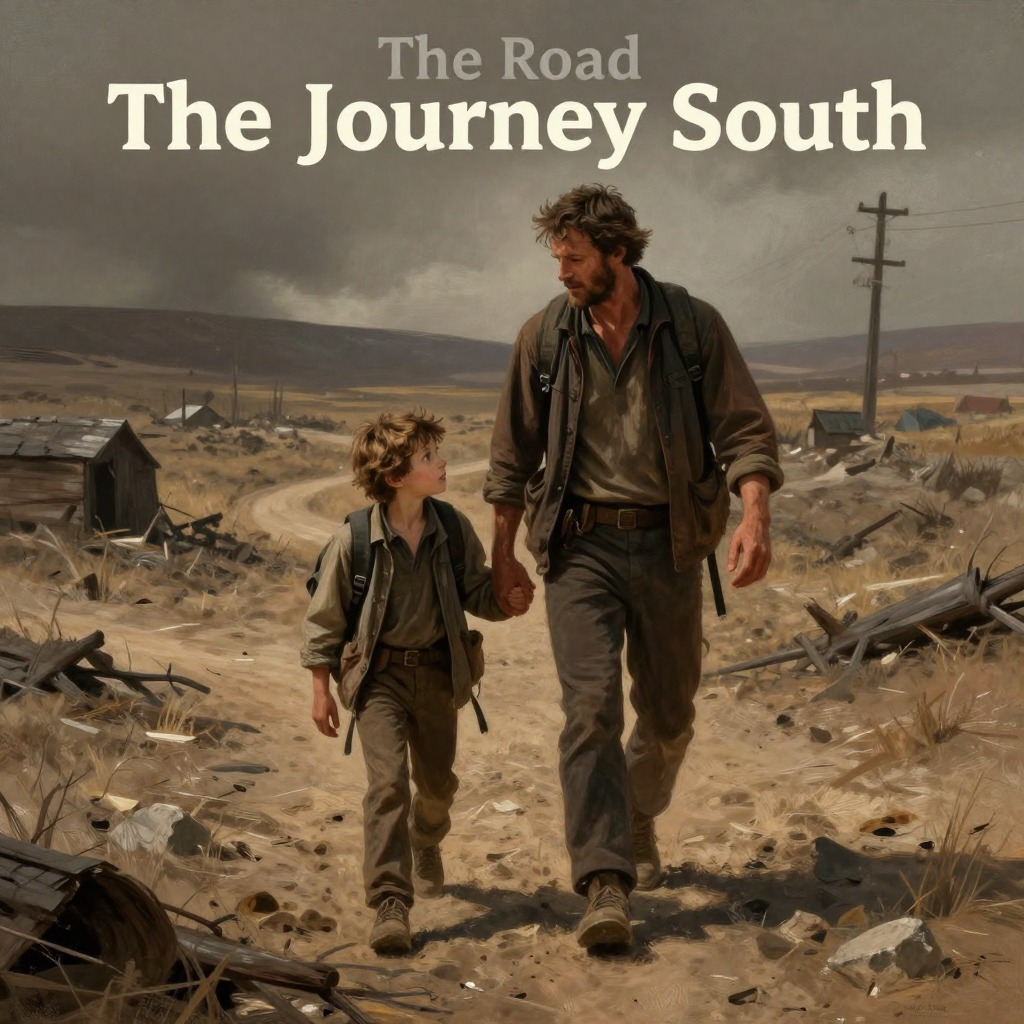
The good guys is the central ethical category in Cormac McCarthy's The Road, a self-designation that the man and the boy use to distinguish themselves from the marauders, cannibals, and slavers who populate the blasted landscape. It is not a label conferred by others or by any external authority; it is a conscious, fragile identity that the man teaches the boy and that the boy in turn insists upon, even when the man's own actions waver. The concept is inseparable from the phrase "carrying the fire," which the man introduces as the inner quality that defines them and that the boy must preserve after the man's death.
Definition and Core Principles
The good guys are defined negatively by what they will not do. The most absolute prohibition is against cannibalism. When the boy, after seeing the charred remains of a human infant on a spit, asks directly, "We wouldnt ever eat anybody, would we?" the man answers, "No. Of course not." The boy presses: "Even if we were starving?" The man replies, "We're starving now," and reaffirms, "No. No matter what." The boy then asks for confirmation: "Because we're the good guys." The man agrees: "Yes." This exchange establishes that the identity is not contingent on circumstances; it holds even when survival itself is at stake. The good guys also do not kill for convenience or revenge. After the man forces a thief who had stolen their cart to strip naked and leave his clothes in the road—a punishment that the boy recognizes as a death sentence—the boy sobs, "But we did kill him." The man's act, though not a direct killing, violates the boy's understanding of what the good guys do.
The Fire as a Metaphor
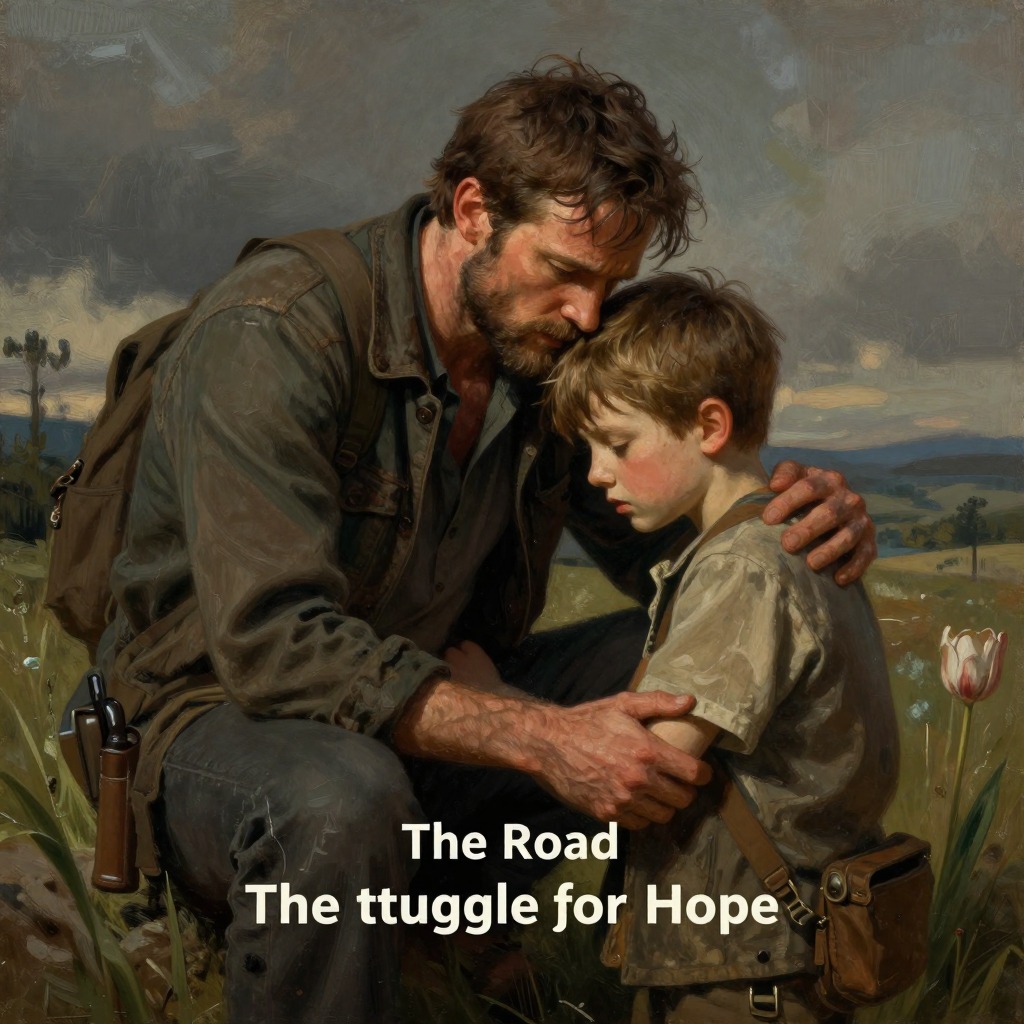
The man tells the boy that they are "carrying the fire." When the boy asks if the fire is real, the man says, "Yes it is." The boy asks where it is, and the man replies, "It's inside you. It was always there. I can see it." The fire is the internal, intangible essence of goodness, compassion, and moral continuity. It is what the good guys possess and what the bad guys lack. When the boy later meets a stranger who offers to take him in, the boy asks, "Are you carrying the fire?" The stranger, after a pause, answers, "Yeah. We are." The boy then asks if they have children and if they eat people; the stranger says no to the latter. Only then does the boy agree to go with him. The fire is thus a test of moral identity, a password that the boy uses to determine whom to trust.
Testing and Transmission
The concept is tested repeatedly. After the man kills a roadagent who threatened the boy, the boy asks, "Are we still the good guys?" The man answers, "Yes. We're still the good guys. And we always will be." The boy repeats, "Yes. We always will be." This call-and-response ritual reinforces the identity in the face of trauma. Later, when the boy is sick and the man is desperate, the boy asks, "There are other good guys. You said so." The man confirms, "Yes." The boy asks where they are, and the man says, "They're hiding." The boy asks, "Who are they hiding from?" The man answers, "From each other." This exchange acknowledges that the good guys are not numerous and that they are in hiding, but it affirms their existence as a matter of faith.
The Boy's Role as Arbiter
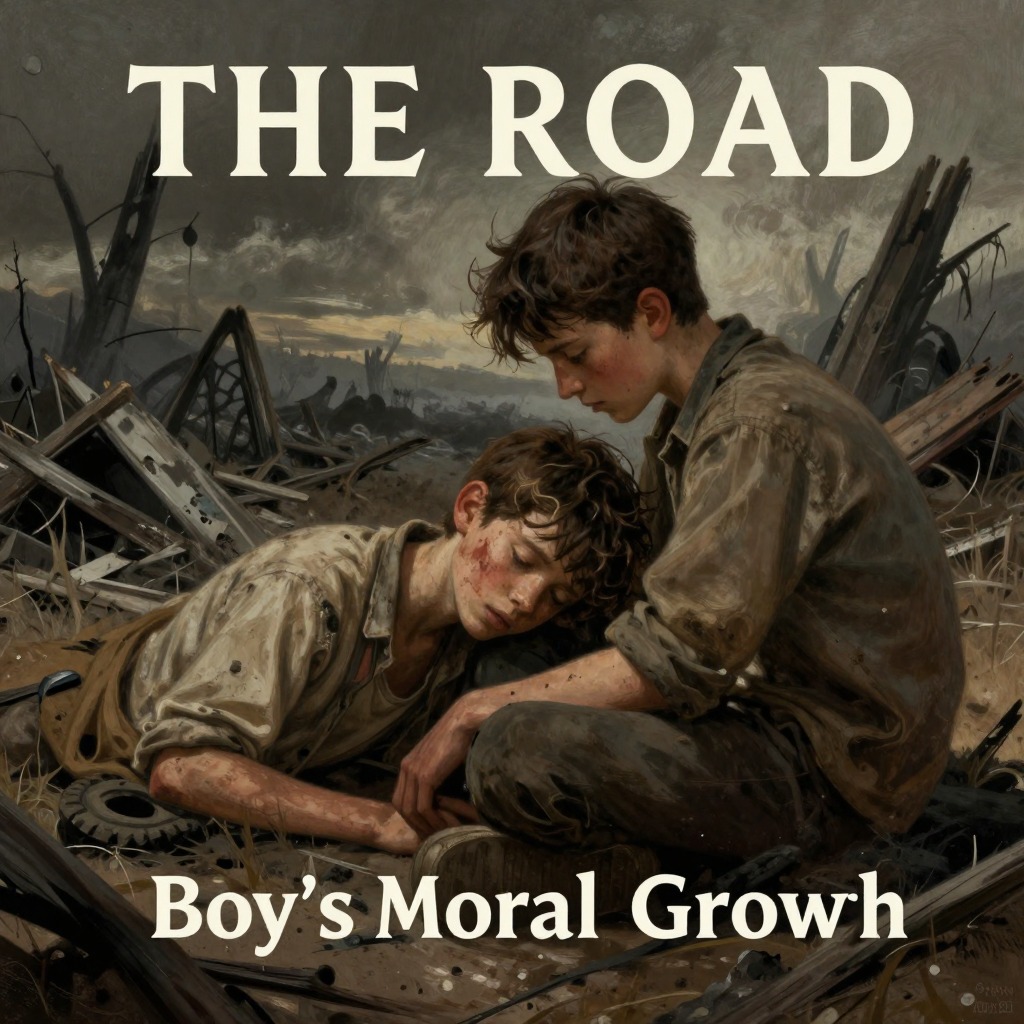
The boy becomes the moral arbiter of the good guys. He is the one who insists on helping the old man Ely, who argues for mercy toward the thief, and who asks the man not to kill. The man recognizes this: when the boy says, "I'm the one" who has to worry about everything, the man does not contradict him. The boy's compassion is the living embodiment of the fire. After the man's death, the boy waits on the road and when a stranger appears, he asks, "Are you one of the good guys?" The stranger, scarred and armed, answers, "Yeah, I'm one of the good guys." The boy then asks, "Are you carrying the fire?" and the stranger, after a moment, affirms it. The boy's final act is to test the stranger against the criteria the man taught him, and to accept the stranger's word.
Thematic Significance
The good guys represent the possibility of moral continuity in a world that has otherwise collapsed into savagery. The concept is not tied to any religious institution or social structure; it is a personal, inherited commitment. The man tells the boy that the good guys are "the ones who keep trying. They dont give up." This definition emphasizes perseverance as much as purity. The boy's survival and his integration into a new family at the end of the novel suggest that the fire is passed on, that the category of the good guys persists beyond the man's death. The final image of the novel—brook trout in mountain streams, "maps of the world in its becoming"—implies that the world the good guys carry within them is one of beauty and mystery, a thing that cannot be put back but that is worth remembering and preserving.